Why wellbeing is turning up on the agenda
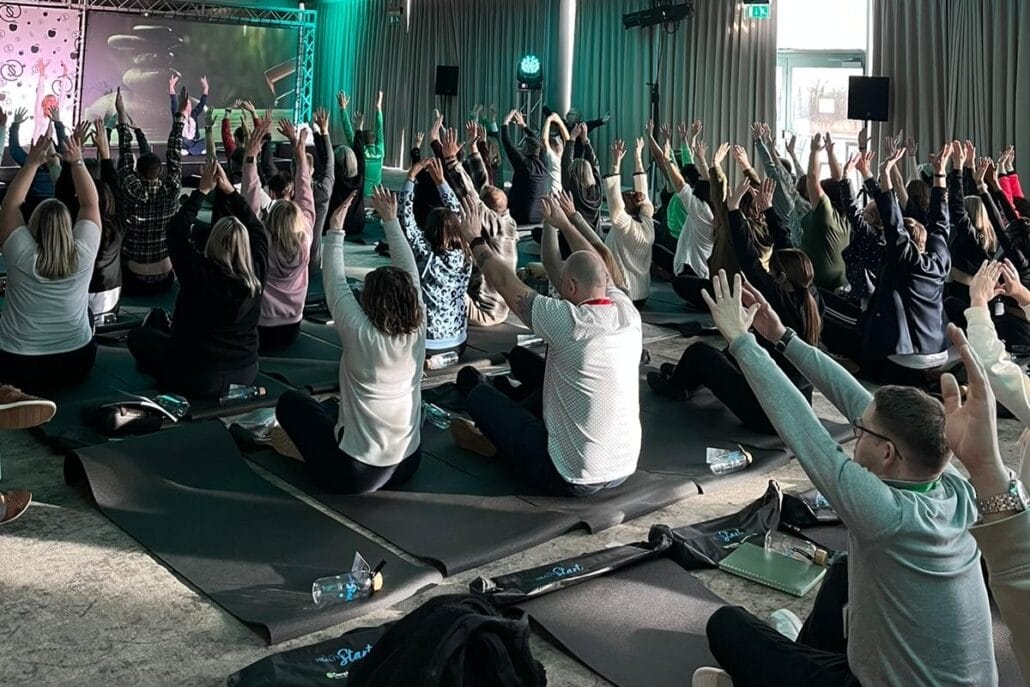
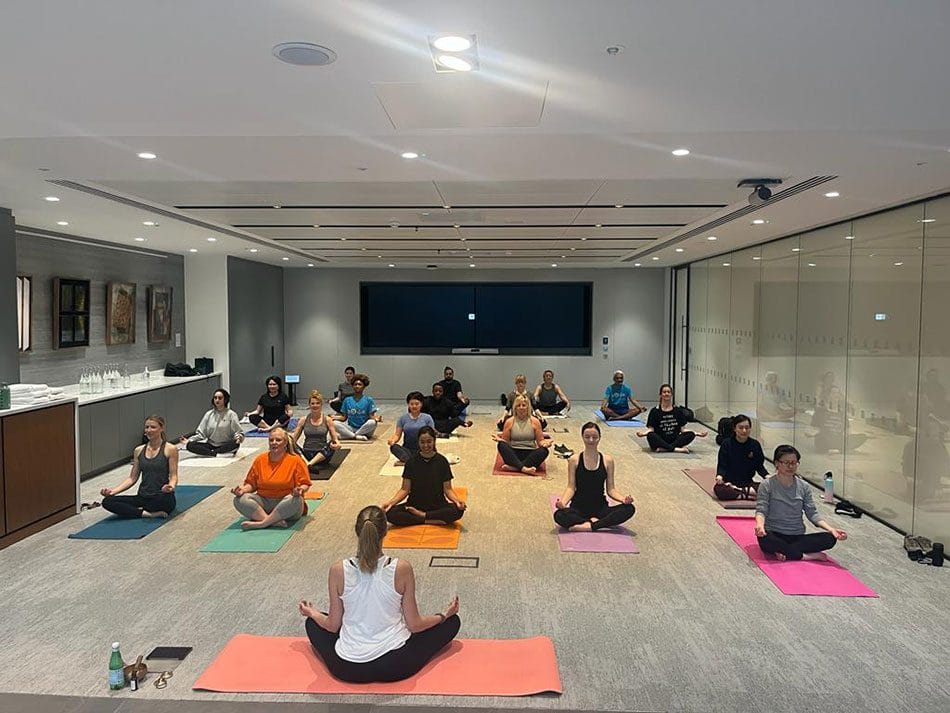
A conference or large public event is a different audience to an office booking a weekly class, and a different kind of brief follows from that. We've taught yoga and mindfulness at some of London's biggest events over the years, adapting to indoor and outdoor settings alike, and the requests rarely look like a standard class — mindfulness for 100 delegates at a conference, bespoke sessions curated for a festival crowd, even a class taught inside a London train station.
The appeal for an organiser is straightforward. Wellbeing programming gives attendees something to do beyond the main stage or the exhibition floor, and done well it creates a talking point of its own, something people mention afterwards rather than forget by the following week.
Mass classes: yoga at a scale most offices never need
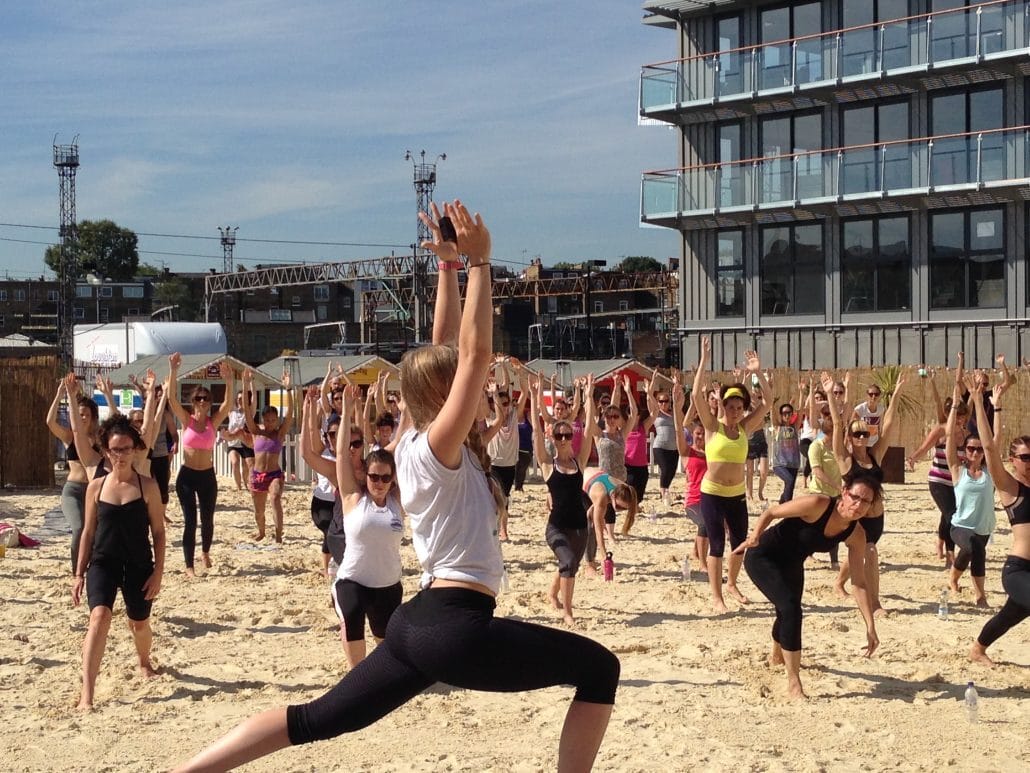
Time Out London brought us in to produce mass yoga across four weeks at Camden Roundhouse, with mats down on the sand of Camden Beach, the venue's summer pop-up, in place of the usual meeting room. Teaching outdoors, on sand, to a public crowd takes a different setup to an office class, but the sessions themselves stayed straightforward and welcoming to whoever turned up on the day.
Yoga Rave London took a different shape entirely — three teachers, a sound bath, a DJ and 5 Rhythms dance woven into one mass class. Other events we've delivered at this kind of scale include ITV's Text Santa appeal, Morning Gloryville, and the internationally featured Singles Yoga and Couples Yoga sessions. The common thread across all of them is accessible, progressive teaching that works for a room of very mixed ability, rather than a class pitched at any one skill level.
Drop-in treatments and a quieter space alongside the main event
Not every part of a wellbeing programme needs to be a class. Desk massage and reflexology both work well as drop-in formats at wellness days and larger events, no appointment needed, with attendees opting in as they pass by rather than committing to a scheduled slot. It suits an event where people are moving between different things and want something they can dip into rather than block out time for.
A treatment format like this needs less room than a class does. A quiet corner or a small private space is usually enough for chair massage or reflexology, set slightly apart from the main stage or class area so it still feels like a break rather than more of the same energy.
The interactive layer: team building formats
Team building yoga tends to carry a more playful, interactive element than a standard class — partner work where you rotate partners, or a large interconnected circle we call humandala yoga, both built around a sense of connection rather than just the practice itself. There's usually a bit of novelty to it too, which gives people something to talk about afterwards and a shared experience with colleagues they might not normally interact with day to day.
At residential conferences, a short session works well as an antidote to a long, intellectually heavy programme, something to shake off the morning cobwebs or a post-lunch slump between more strenuous workshops. We've also built sessions around the idea of 'superlearning', integrating yoga and breathwork at regular intervals through a workshop or course to help keep participants fresh and receptive, which is how we approached the yoga and mindfulness sessions built into Tanya Moore's accelerated learning language courses.
Lead time and space: what to sort out early
A production on the scale of the Roundhouse residency takes real planning, coordinating teachers, kit and scheduling across four weeks inside a busy public venue with its own crew and its own way of doing things. A single conference slot or a shorter break in the programme is usually a much simpler, quicker booking by comparison, without the same production overhead.
Space is more flexible than people expect. We've adapted to indoor and outdoor settings, a pop-up beach, and even a train station, so the format tends to bend around whatever space an event actually has rather than the other way round. The earlier an organiser can share the venue and rough numbers, the easier it is to match the right format and the right number of teachers to the day.
Quick answers
Can wellbeing sessions work outdoors or in unconventional venues?
Yes. We've taught indoors and outdoors, on a pop-up beach and even inside a train station, adapting the format to whatever space an event has.
Does it have to be a full class, or can it be something shorter?
It doesn't have to be a full class. Drop-in treatments like chair massage or reflexology, and shorter break-style sessions, both work well alongside or instead of a full class.
How far ahead should we book for a large event?
It depends on the scale. A multi-week production needs proper lead time to coordinate teachers and scheduling, while a single conference slot can often be arranged much more quickly. Get in touch via /contact/ with your dates and we'll let you know what's realistic.