What a corporate sound bath actually is
A sound bath is built around the idea that everything resonates at its own frequency, from the natural world around you down to the cells in your body. In practice, that means a facilitator playing a series of instruments, such as crystal bowls, in a way that's meant to ease tension and encourage a proper sense of calm, rather than anything you're asked to actively join in with.
Corporate Sound Bath London sessions run on exactly this idea, brought into an office setting rather than a studio or retreat.
What the room actually looks like
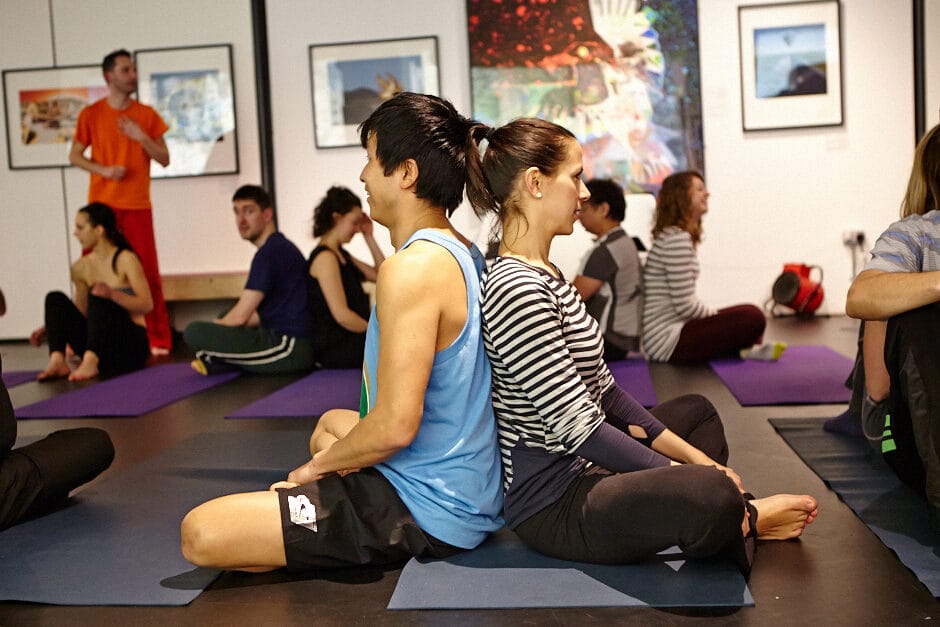
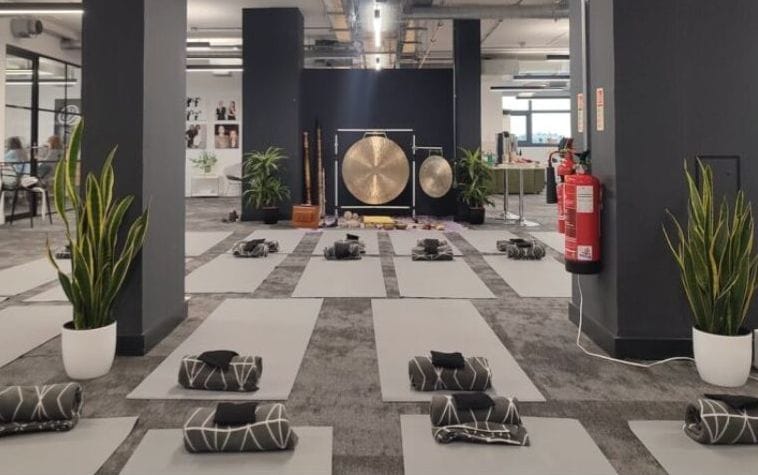
There's no special setup required. The facilitator can lead a session from the floor, a cushion, a mat or even a desk, and participants are free to sit however is most comfortable for them, whether that's cross-legged on a cushion or simply settled into an office chair.
Sessions are usually kept fairly small and boutique, with ten to twelve people the ideal number for a single sitting, though a room can be adapted to take up to twenty-five if your team's bigger than that.
What you actually do, which is nothing
This is the part people tend to find hardest to picture beforehand. There's no posture to hold, no instruction to follow and nothing to get right or wrong. You sit or lie in whatever position suits you and let the sound do the work.
As Richard, our founder, puts it: "A deep state of relaxation is often achieved, which is great for those who might not feel drawn to more traditional active relaxation practices such as yoga and meditation." It's a genuinely passive experience, which is exactly the point for people who'd rather not be asked to do anything.
What it actually sounds like
A standalone session centres on instruments like crystal bowls, played to build up layers of tone rather than anything resembling a song with a beat or lyrics. When a sound bath is combined with a longer tea ceremony session, the instrument list extends further, taking in Himalayan bowls, a Siberian shamanic drum, Kochi bells, a hand-held gong and an ocean drum, often closing with a period of yoga nidra for full relaxation.
Either way, there's nothing sudden or jarring about it. The sound builds and settles gradually, which is a large part of what allows people to properly switch off during the session.
How people tend to feel afterwards
People commonly describe leaving a session feeling relaxed, rejuvenated and a bit more energised, with a clearer head for whatever's left of the working day. Some teams notice the effect isn't confined to whoever was in the room either, with a slightly lighter mood spreading through the wider office afterwards.
It's worth being realistic about what this is and isn't. It's a genuinely restful experience, not a medical treatment, and the way it lands varies from person to person.
Quick answers
Do I need to do anything during a sound bath?
No. You simply sit or lie in whatever position is comfortable and let the instruments play. There's no posture or technique to get right.
How is this different from a meditation or yoga session?
It's considerably more passive. As Richard puts it, a sound bath tends to bring on a deep state of relaxation without asking anything active of you, which suits people who don't feel drawn to yoga or meditation.
How many people can take part in one session?
The ideal is a boutique setting of ten to twelve people, though a room can be adapted to take up to twenty-five if your team is larger.