Start with the problem, not the topic
It's easy to pick a workshop topic because it sounds appealing rather than because it answers something your team is actually dealing with. Stress management, health coaching, mental health, switching off, winter wellness and nutrition all get requested regularly, and each one can be built around a specific angle rather than delivered as a generic version — sleep for productivity and creativity, gut health and its link to mental health, or sustainable exercise for women going through perimenopause and menopause are all variations we've built before.
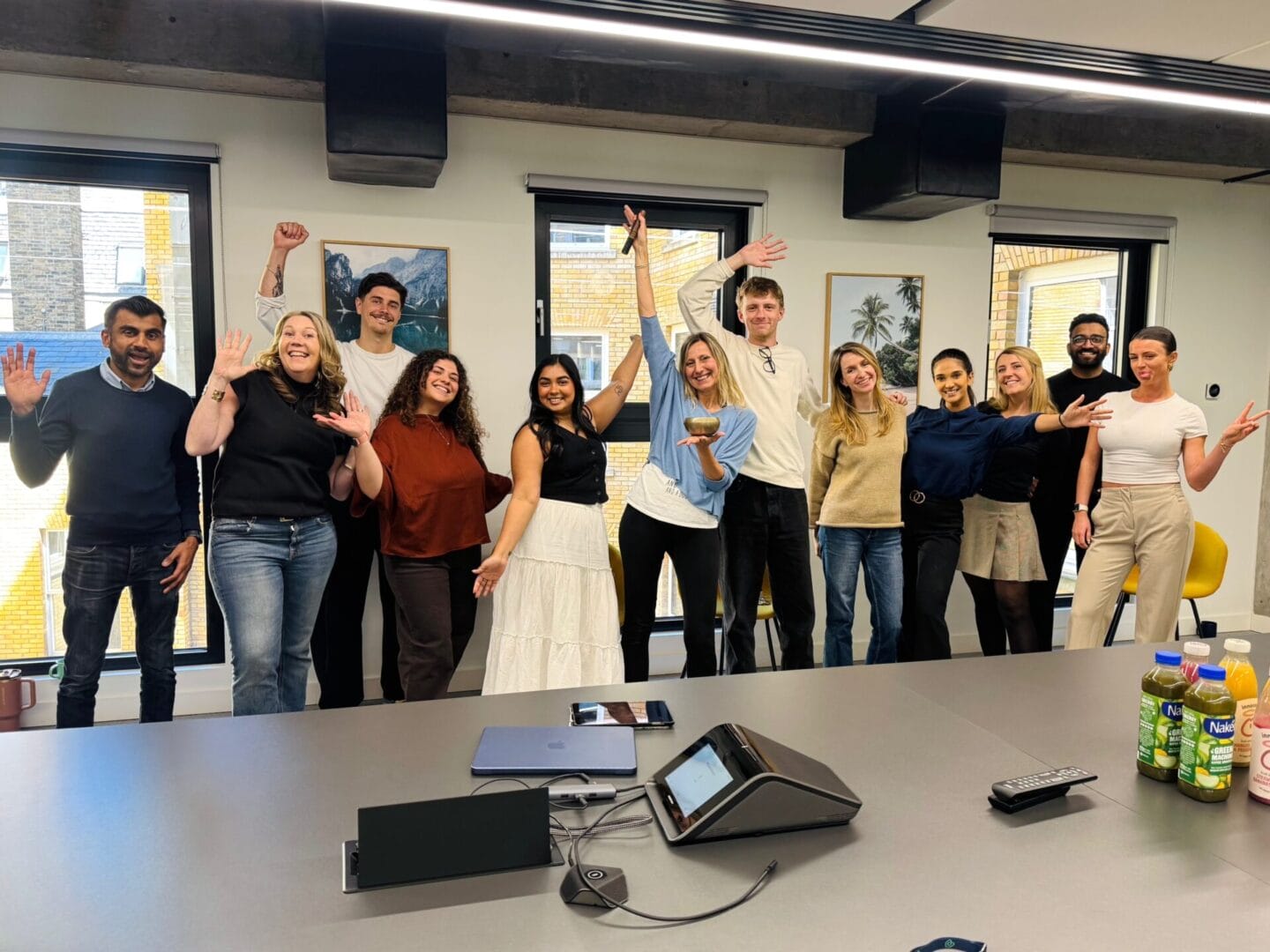
When Plentific, the London property-tech company, brought us in, the brief was specific from the start: a stress-management workshop for their team, rather than a general wellbeing session. That specificity is usually a good sign. A workshop built around a real, named problem tends to land better than one built around a topic that just sounded good in a planning meeting.
Workshop or ongoing class?
Not everyone gets motivated the same way. Some people take to a practice readily and are happy to be led through it; others want to understand the concepts and the reasoning behind them first, and only feel ready to apply anything once they've grasped why it matters. A workshop is built for the second group as much as the first — it leads with understanding rather than assuming everyone's already bought in.
That doesn't mean a workshop has to stay purely theoretical. Most of ours combine some explanation of the concepts with practical elements — mindfulness, meditation or relaxation woven through the session — so people leave having understood something and actually tried it, rather than just having listened to it.
Choosing a format that fits your team
A workshop doesn't have to mean the whole office in one room. Team coaching sessions work well for smaller groups of 6 to 10 people, often built around shared challenges identified through a short survey beforehand, so the content is aimed at what that particular group is actually dealing with rather than a general audience.
A company-wide breakfast or lunch seminar suits a broader introduction to a topic, while 1:1 coaching is better suited to an executive working through personal health goals rather than a group setting. Some topics, mental health in particular, can run as a bespoke session up to a full day, often pairing a mental health professional with someone experienced in yoga, meditation and relaxation so the session covers both the practical and the more reflective side of the subject.
Making the room work without much fuss
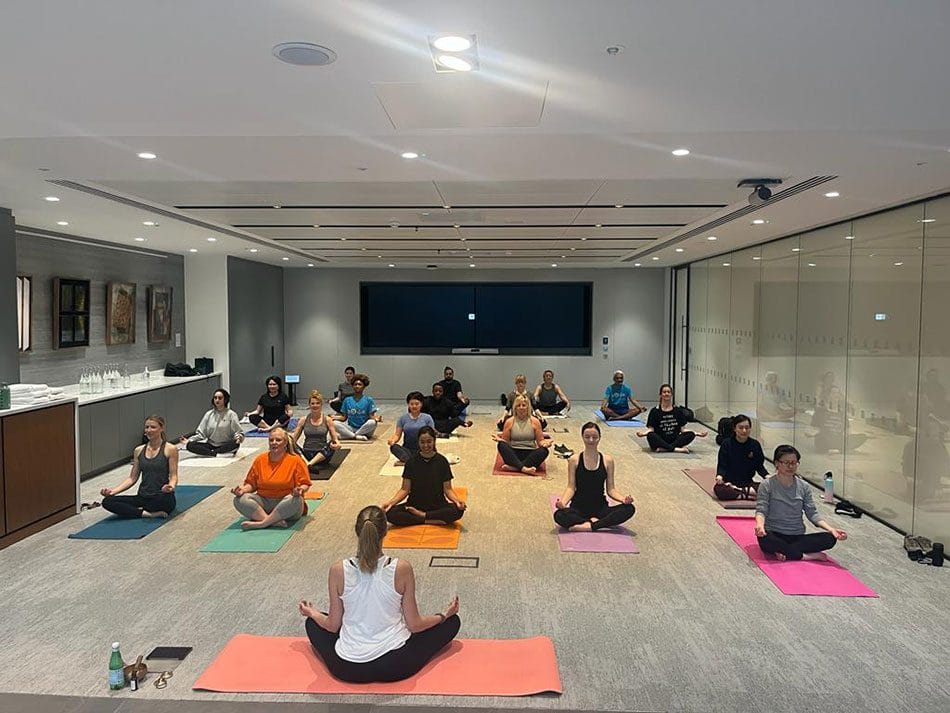
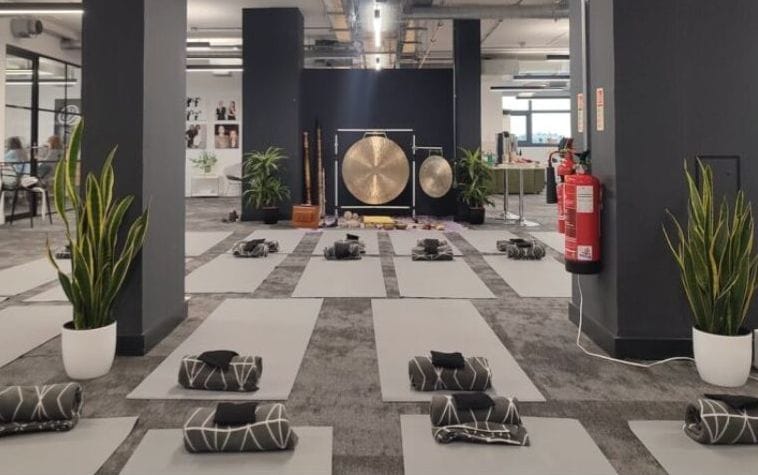
The Plentific workshop ran inside their own office rather than an off-site venue, which is typical — most workshops don't need much beyond a room where people can sit comfortably and hear the person leading it. If a workshop includes practical elements like mindfulness or relaxation, a bit of extra space helps, but it doesn't need the same setup as a full movement class.
Built well, a workshop should be accessible to everyone in the room regardless of whether they've ever tried yoga, Pilates or mindfulness before. That's worth deciding early, since it shapes how the content gets pitched — a workshop that assumes prior experience will lose part of the room before it starts.
The part that makes it stick a month later
The workshops that get referred back to weeks later tend to share one thing: something tangible to take away. A stress-management session, for instance, is usually built to close with a set of suggested resources for de-stressing outside of work, rather than simply ending when the session does. Health coaching sessions work the same way, focused on practical, hands-on tools people can genuinely fold into their routine rather than abstract advice.
Mental health workshops tend to go further still, with a dedicated section on support and resources alongside the practical techniques covered in the room. If you want a workshop to still be useful a month on, ask what people are meant to walk away holding onto, and build the session around giving them that clearly rather than leaving it implied.
Quick answers
Do we need to already book classes with you to run a workshop?
No. Workshops can be booked as a standalone session, whether that's a one-off or something you'd like to repeat.
Can a workshop be built around something specific to our team?
Yes. Most of our workshops are bespoke variations on a core topic, built around whatever your team is actually dealing with rather than a fixed script.
How long does a workshop typically run?
It depends on the format. A team coaching session or seminar is usually a shorter, focused slot, while some topics, such as mental health, can extend to a full day if that suits what you need covered. Get in touch via /contact/ and we'll talk through the right length for your team.