How a desk reshapes a body over time
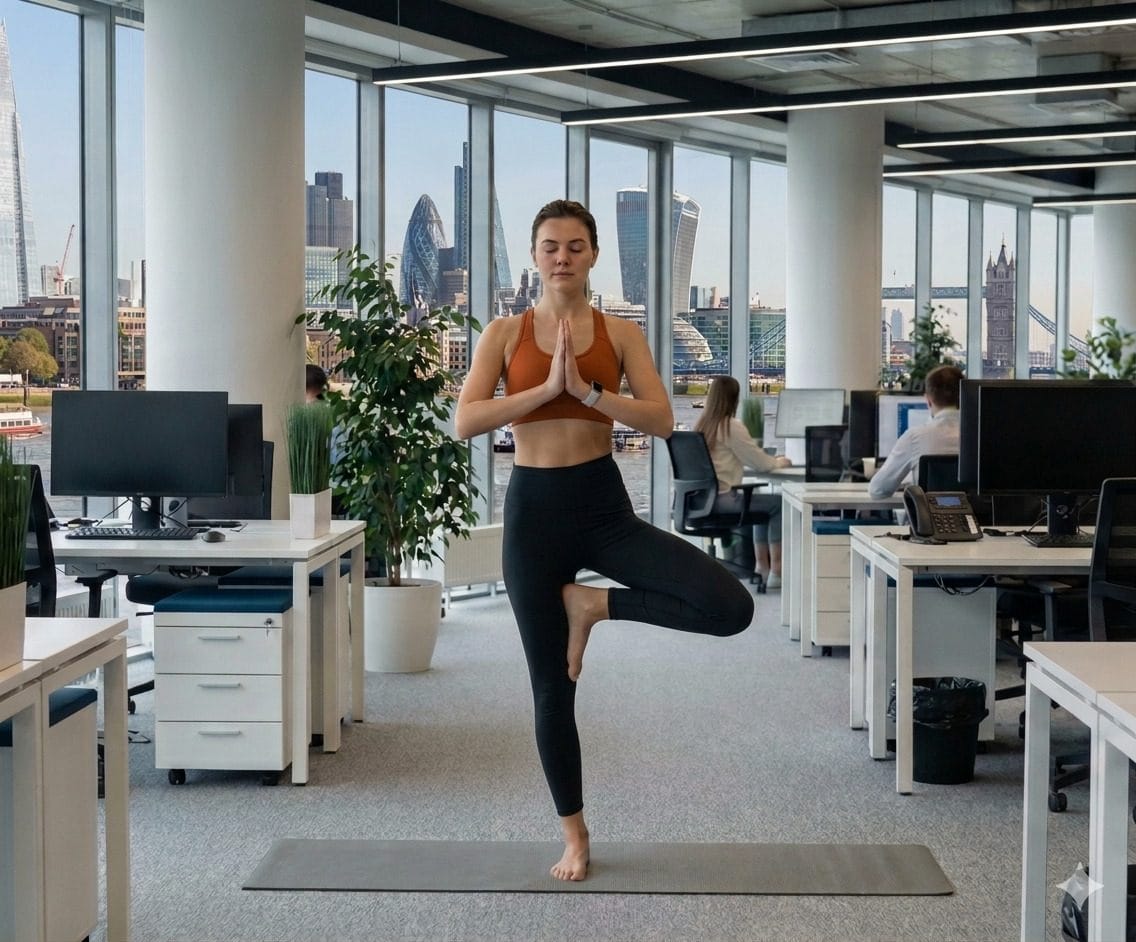
Every job leaves its own pattern on the body, and a desk job is no exception. Hours spent sitting, reaching for a keyboard and looking at a screen ask the same few muscles to do all the work, day after day, while others barely get used at all.
Over months and years that pattern hardens into something more stubborn. Some muscle groups become tight from overuse, while others grow weak and inefficient from being left idle, and poor posture creeps in as the body adapts to whichever position it spends the most time in. Left unaddressed, that kind of imbalance is what tends to sit behind ongoing back, neck, leg and foot niggles.
What Pilates is actually doing about it
Pilates is a low impact method of exercise built around control rather than force, which is part of why it's recommended so often for people whose main physical stress comes from sitting still rather than from sport or manual work.
Rather than targeting one muscle group in isolation, it works the body as a whole, with the aim of rebalancing overworked and underworked muscles against each other and improving postural alignment in the process. For a body that's spent all week in one position, that whole-body approach tends to matter more than any single stretch or strengthening move.
What a session actually involves
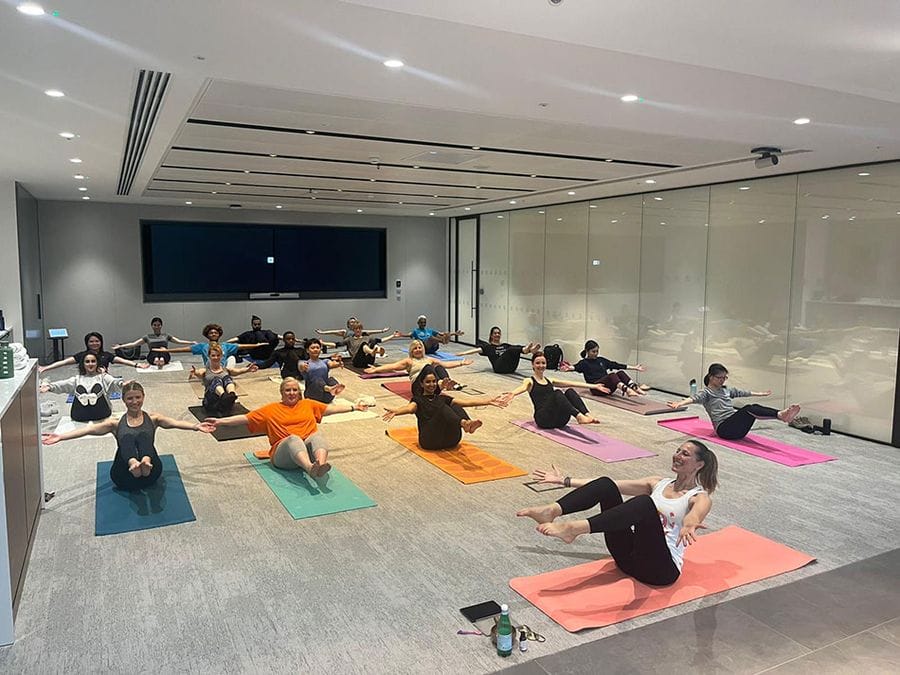
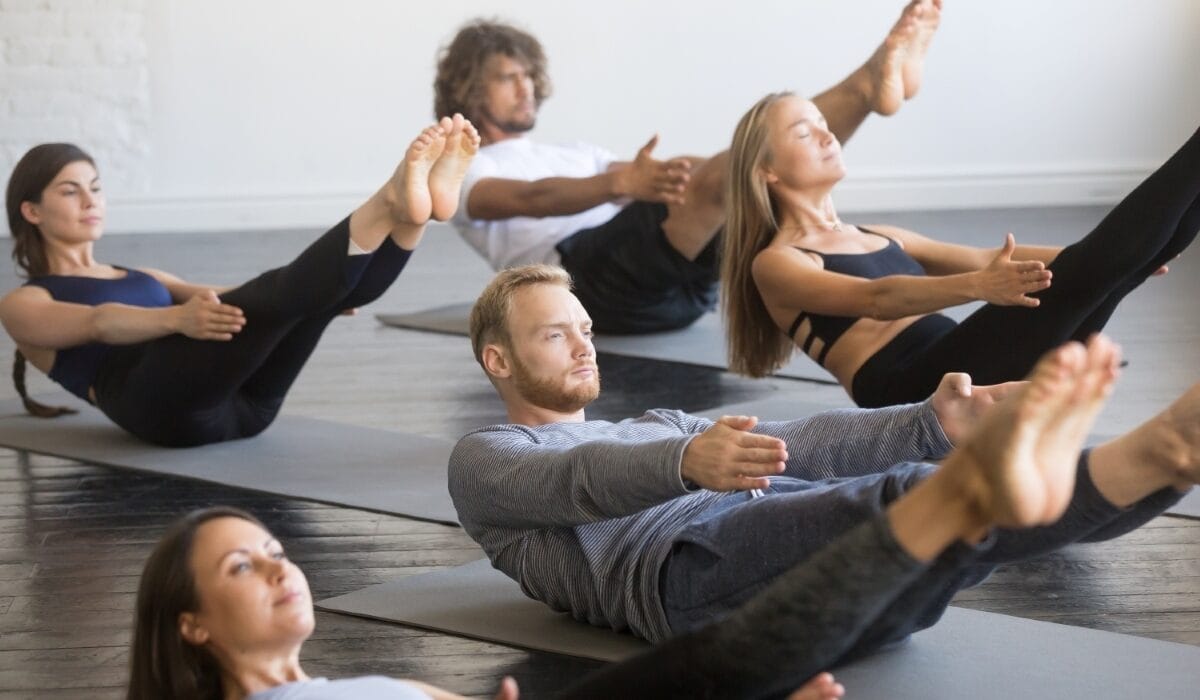
Classes are built around mat work. A session usually opens with a few gentle stretches to ease into things, then moves into the main Pilates exercises, which are designed to challenge, strengthen and mobilise the body in a fairly measured, controlled way.
It's not a high-intensity format, and it isn't meant to be. Most people leave feeling lengthened and a bit more energised, but also noticeably more relaxed than when they walked in, which is a fairly unusual combination for a lunchtime workout.
No studio, and nothing to bring
Classes run in whatever suitable space a workplace has going, which in practice tends to mean a meeting room, a waiting area, a canteen, or a balcony when the weather allows. None of it needs to look or feel like a gym.
Mats are supplied as part of the booking too, so nobody needs to bring anything from home or improvise with a mat kept under a desk. If space is genuinely tight, a chair-based session is worth considering instead.
Getting a class going
Corporate Yoga London has been bringing yoga, Pilates and workplace wellbeing into London offices since 2012, usually on a same-teacher basis, so the person leading your Wednesday lunchtime slot is the same person leading it next month too.
Ongoing classes are typically booked as one session a week over a minimum of six weeks, which gives a teacher enough time to actually notice and work with a group's specific patterns rather than starting from scratch each visit. Get in touch to talk through what would suit your team.
Quick answers
Do I need to be flexible or already fit to try Pilates?
No. It's a low impact format built around control rather than force, and classes are paced to suit whoever's in the room rather than assuming a particular fitness level.
Do we need to buy or bring our own mats?
No. Mats are supplied as part of the booking, so there's nothing for your team to source or bring from home.
What if we don't have a spare room to use?
Classes can run in most spaces a workplace already has, including a meeting room, waiting area, canteen or balcony. If space is genuinely limited, a chair-based session is worth asking about instead.
How is this different from a general fitness class?
Pilates is specifically aimed at rebalancing the muscular imbalances that build up from repetitive daily patterns, like sitting at a desk, rather than being a general cardio or strength workout.