What corporate yoga actually is
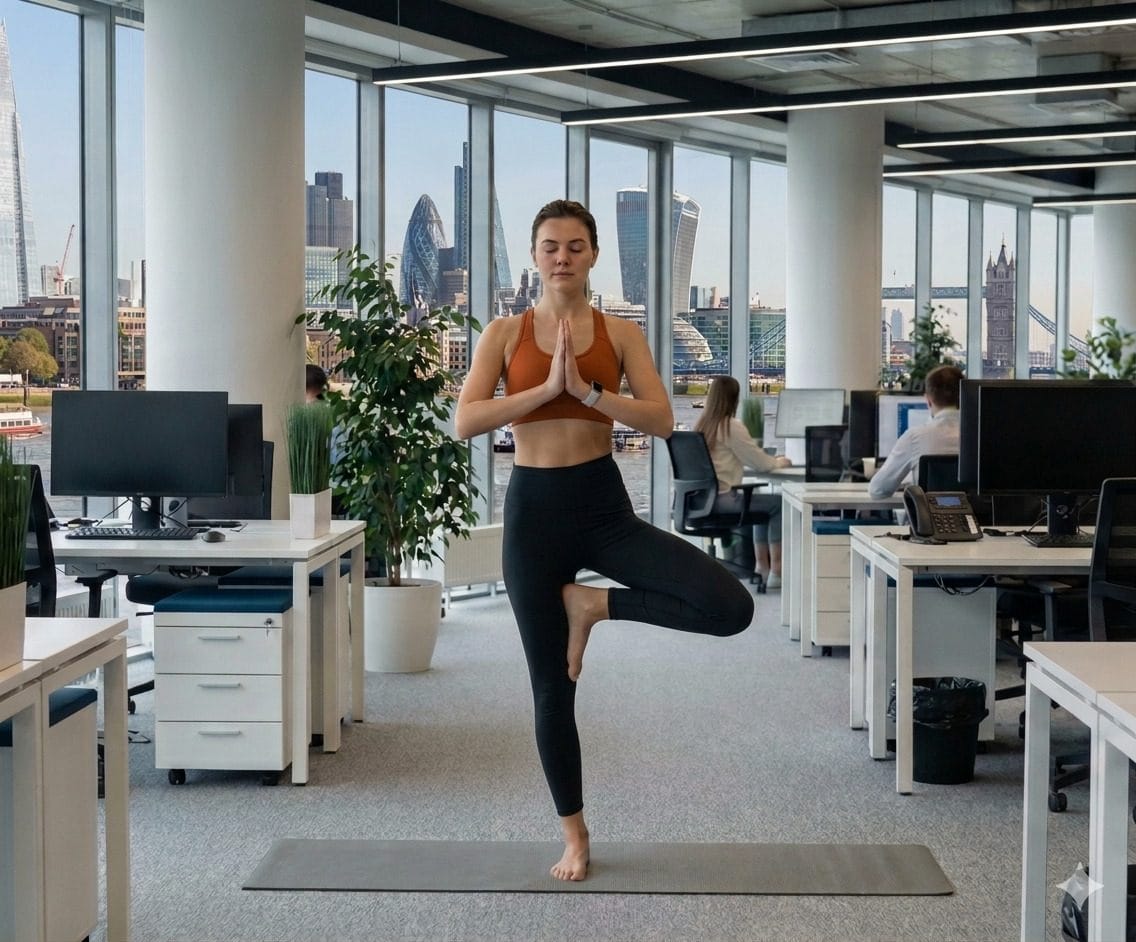
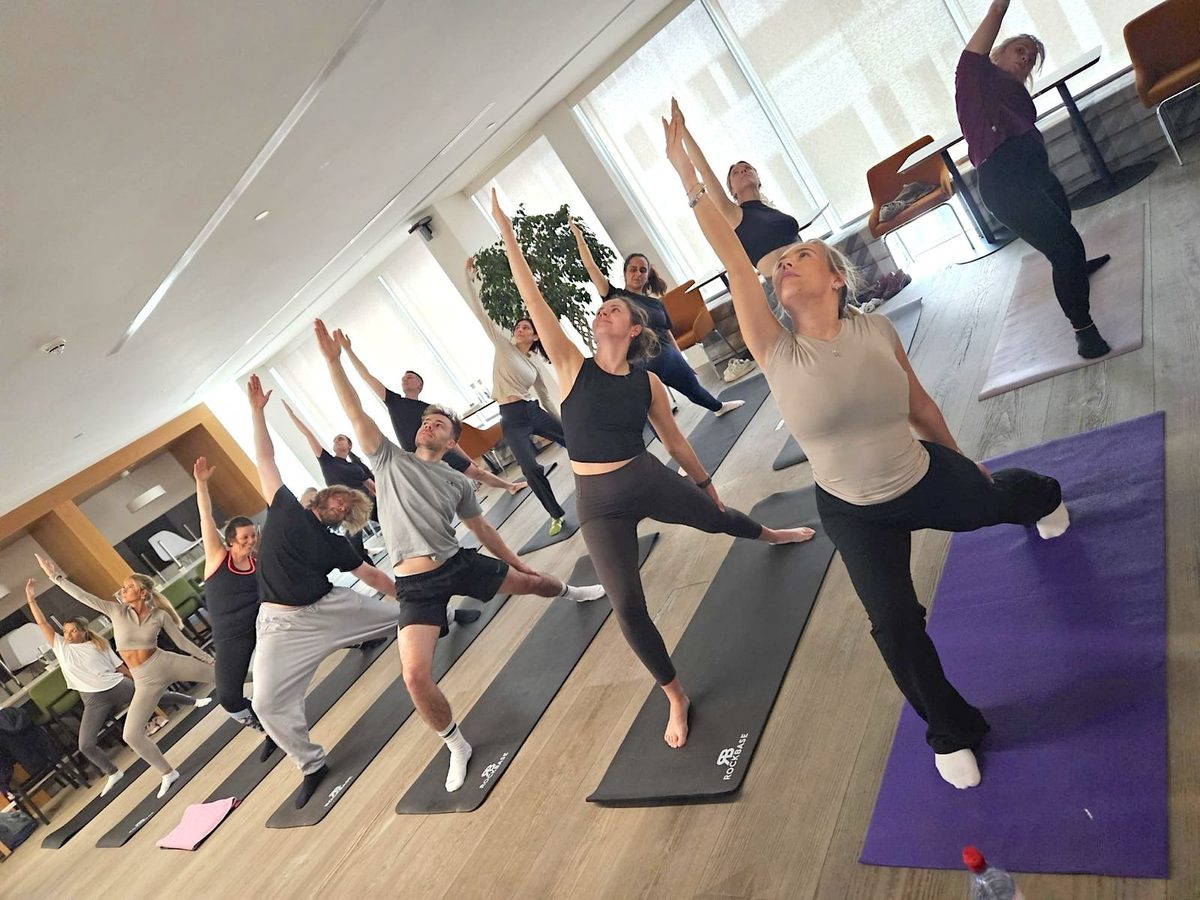
Office yoga is generally a slower, breath-led practice, built around a mix of seated and standing movement rather than anything acrobatic. Mixed levels are welcome as standard — nobody's expected to have done it before, and a decent teacher will adapt pace and posture choices to whoever's actually in the room that day.
There's usually a breathing or settling component woven through it, which is part of why people describe the hour as much about the pause as the stretching.
What it feels like in an office setting
In practice, it's quieter than people expect. The pace is unhurried, instructions are calm rather than barked, and there's rarely any pressure to hit a particular shape. For a lot of people, the appeal isn't really the stretching at all — it's the fact that for forty-five minutes nobody is looking at a screen or answering a message.
It suits people who want the session to feel like a genuine break from the working day, rather than another form of exercise to tick off.
What corporate Pilates actually is
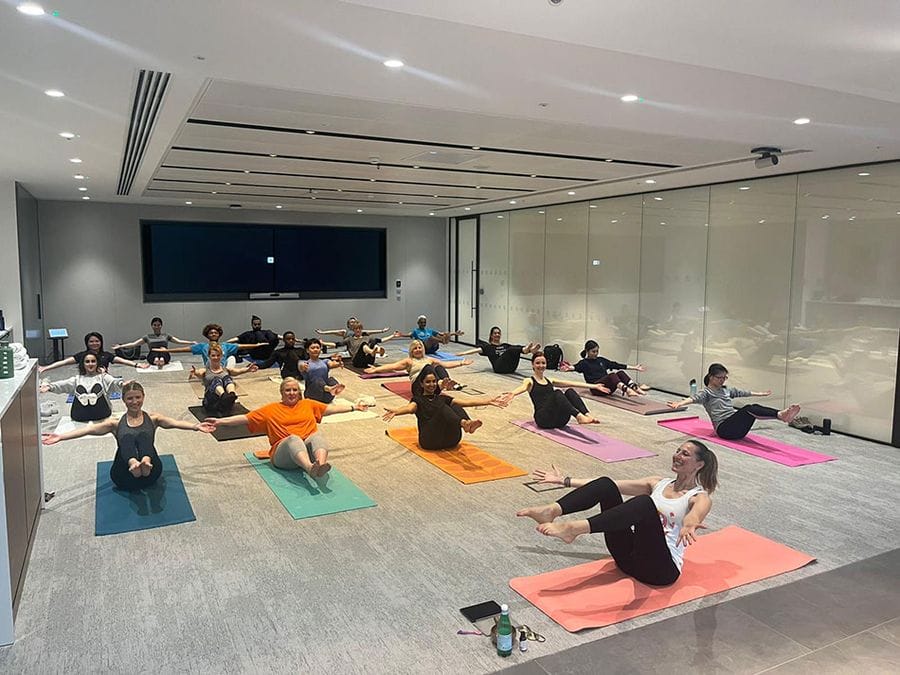
Pilates is more structured and more obviously physical. It's built around controlled, repeated movements that focus on the core, posture and alignment, usually done on a mat, and the instructions tend to be more precise — a particular position of the hips, a specific count, a named muscle group being worked.
It still suits mixed levels and doesn't require any equipment beyond a mat, but it asks a bit more concentration and physical effort than a gentle yoga class typically does.
What it feels like in an office setting
Pilates in an office has a brisker energy to it. There's less lying still and more repeated, deliberate movement, and people tend to leave feeling like they've done a workout rather than had a pause. For anyone who finds a slower yoga class a bit too quiet, or who wants a clearer sense of having exercised, Pilates usually lands better.
Who tends to prefer which
There's no hard rule, but patterns do show up over enough teams and enough sessions.
- People after a mental reset from a busy week tend to gravitate towards yoga.
- People who want a clear sense of physical effort, or who already do other structured exercise, often prefer Pilates.
- Those managing back or posture issues sometimes get more from Pilates' focus on core and alignment, though either can be adapted with the right teacher.
- People newer to any kind of movement class sometimes find Pilates' precise instructions easier to follow than yoga's more open, feel-your-way pacing — though just as many find the opposite.
Why you don't have to choose
None of this needs settling with a vote. Plenty of teams run one on alternating weeks, or offer both on different days and let people pick based on how their week is going. The scheduling and teacher side of that is handled the same way regardless of format, so mixing the two adds very little admin for whoever's organising it.
If you're not sure which your team would prefer, a short trial period of each is usually a more useful answer than trying to guess from a desk.