Why your desk deserves five minutes
Hours at a screen do a fairly predictable thing to a body: shoulders creep up towards the ears, the lower back rounds forward, wrists stiffen from typing, and by mid-afternoon everything below the neck feels like it belongs to someone else. None of this needs a gym kit or a lunchtime class to address. A few minutes of gentle movement in your chair, done regularly, can help ease a good deal of it before it builds into something more stubborn.
These are the stretches we teach most often in London offices, adapted so you can do them at your own desk, in your own clothes, without anyone else needing to notice.
The stretches
You don't need to do all twelve in one go. A handful, spread across the day, is plenty.
- Neck tilts and rolls — Sit tall, drop one ear gently towards the same shoulder until you feel a light stretch down the side of your neck, hold for a few breaths, then swap sides. Follow with a slow half-roll forward, chin to chest, moving gently from ear to ear. It can help ease the tightness that builds across the neck and upper shoulders from looking at a screen.
- Shoulder rolls — Lift both shoulders up towards your ears, then roll them back and down in a slow circle, six to eight times, then reverse the direction. A small movement, but it can help ease the hunching that creeps in over a long stretch of typing.
- Seated spinal twist — Sit tall with feet flat on the floor, place one hand on the outside of the opposite knee and the other on the back of your chair, then gently twist through your middle to look over your shoulder. Hold for a few breaths and repeat on the other side. It can help ease stiffness through the mid-back from sitting in one position too long.
- Wrist and finger stretches — Extend one arm in front of you, palm up, and use the other hand to gently pull the fingers back towards you, then flip the palm down and repeat. Follow with a few slow circles of each wrist. It can help ease the ache that builds in the hands and forearms from typing and using a mouse all day.
- Seated cat-cow — Place your hands on your knees, and as you breathe in arch your back and lift your chest, then as you breathe out round your spine and drop your chin towards your chest. Move slowly between the two a handful of times. It can help ease general stiffness through the whole spine and is a good one to do between calls.
- Chest opener — Reach both arms behind you and clasp your hands together, or hold opposite elbows if that's more comfortable, then gently draw your shoulder blades together and lift your chest slightly. Hold for a few breaths. It can help ease the rounded-shoulder posture that comes from hours facing a keyboard.
- Overhead reach and side bend — Reach both arms overhead, interlace your fingers if you can, then lean gently to one side and hold, before returning to centre and leaning the other way. It can help ease tightness along the sides of the body and give the spine a bit of length after sitting still.
- Seated figure-four — Cross one ankle over the opposite knee, keeping the raised knee relaxed rather than pulled up, then hinge forward slightly from the hips until you feel a stretch through the hip and outer thigh. Hold, then swap sides. It can help ease the tightness that builds through the hips from a day spent seated.
- Ankle circles and toe raises — Lift one foot slightly off the floor and circle the ankle slowly in each direction, then place it back down and lift your toes while keeping your heel down, holding for a moment before releasing. It can help keep some circulation going through the lower legs and feet during a long, static day.
- Eagle arms — Cross one arm over the other in front of you, bend the elbows and bring the backs of your hands together, or hold opposite shoulders if that's easier, then lift the elbows slightly and draw them away from your face. It can help ease tension between the shoulder blades that builds from reaching forward to a keyboard all day.
- Seated forward fold — With feet flat on the floor slightly wider than hip width, hinge forward from the hips and let your upper body and arms hang towards the floor between your knees, keeping the movement gentle rather than forced. It can help ease tension through the lower back and gives the neck and shoulders a moment of proper rest.
- Thoracic extension against the chair back — Sit towards the front edge of your chair, place your hands behind your head, and gently arch your upper back over the top of the chair back, opening through the chest. It can help ease the mid-back stiffness that builds from hours spent curled forward over a desk.
A gentle note on doing these safely
None of this should hurt. Move into each stretch until you feel a gentle pull, not a sharp sensation, and back off if anything feels wrong rather than pushing through it. If you have an existing injury, a recent operation, or a condition your GP is already keeping an eye on, it's worth checking with them before adding a new stretching routine, rather than relying on a blog post.
These are gentle, general stretches meant to help ease everyday stiffness — they're not a substitute for physiotherapy or medical advice if something is properly hurting.
Making it a habit
The stretches that actually get done are the ones attached to something else you already do — the kettle boiling, the end of a call, waiting for a page to load. Pick two or three that target wherever you personally hold tension and pair them with a small daily trigger rather than trying to remember all twelve at once.
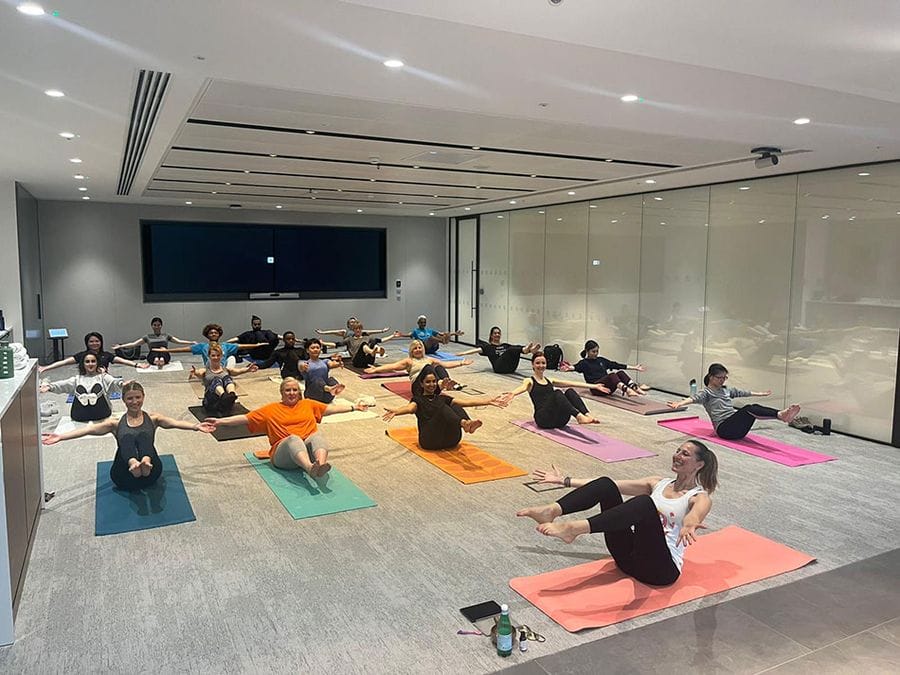
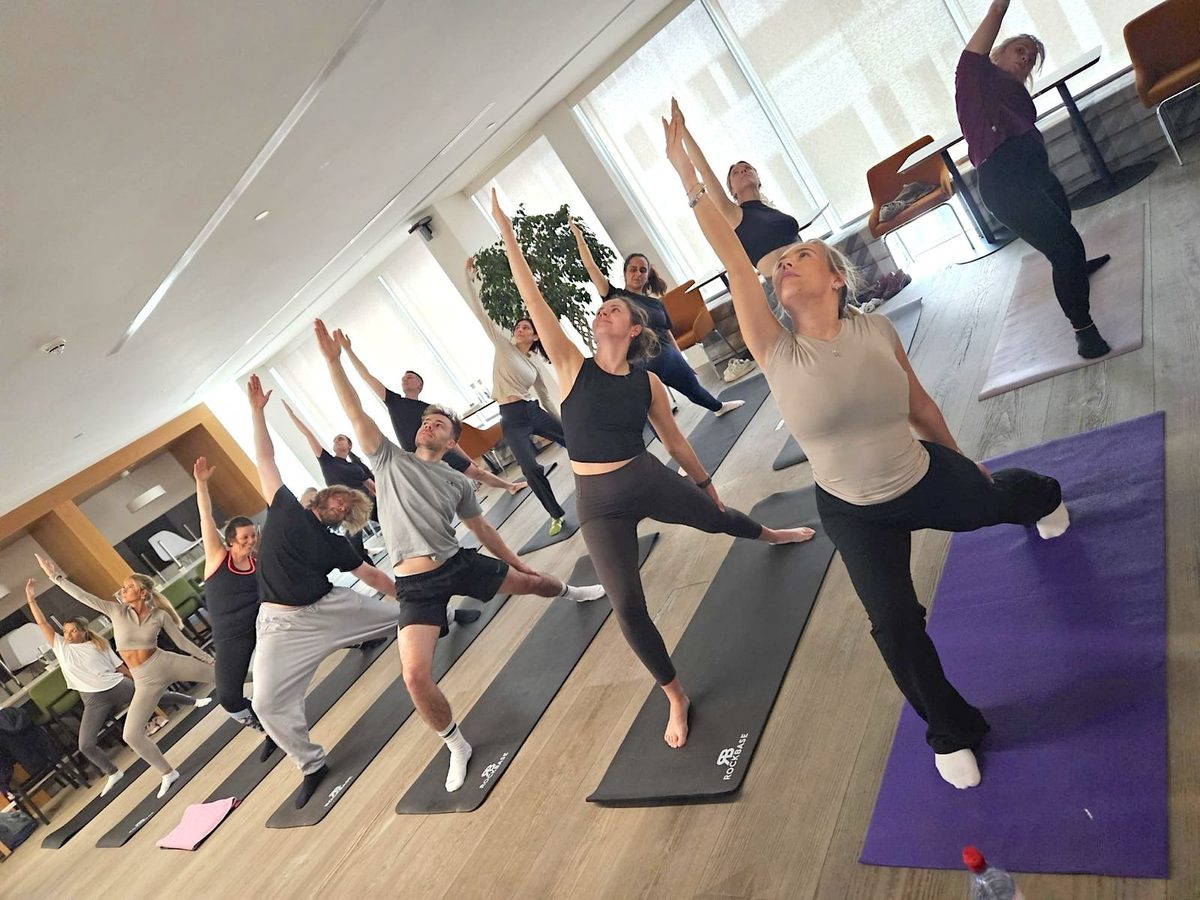
If your team already has a weekly class booked in with a teacher, these are a good way of filling the gaps between sessions, and most people find they suit any level, whether or not they've done a class before.