If nobody on your team has done this before
This is one of the most common starting points for us: a team where genuinely nobody has done yoga, and someone's been asked to organise a session anyway. There's usually a bit of nervousness attached. Will people feel silly, will someone show them up, will it be the kind of thing where everyone else clearly knows what they're doing and one person is left staring at their feet.
None of that happens in practice, and it's worth saying plainly: a beginner-friendly office class is built for exactly this situation. It's the normal case, not the exception.
What the class actually looks like
There's no lycra requirement, no assumption of flexibility, and no expectation that anyone's done this before. Comfortable clothes are genuinely fine. Most people come as they are, sometimes still in their work clothes with shoes off. The teacher talks people through everything, adjusts the pace to the room, and treats mixed ability as completely normal, because it is.
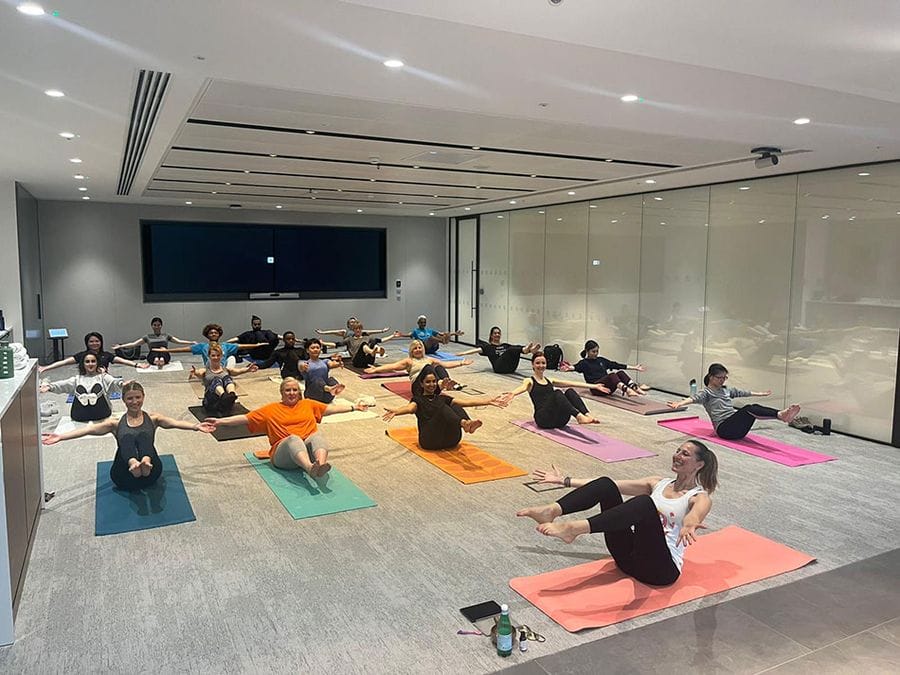
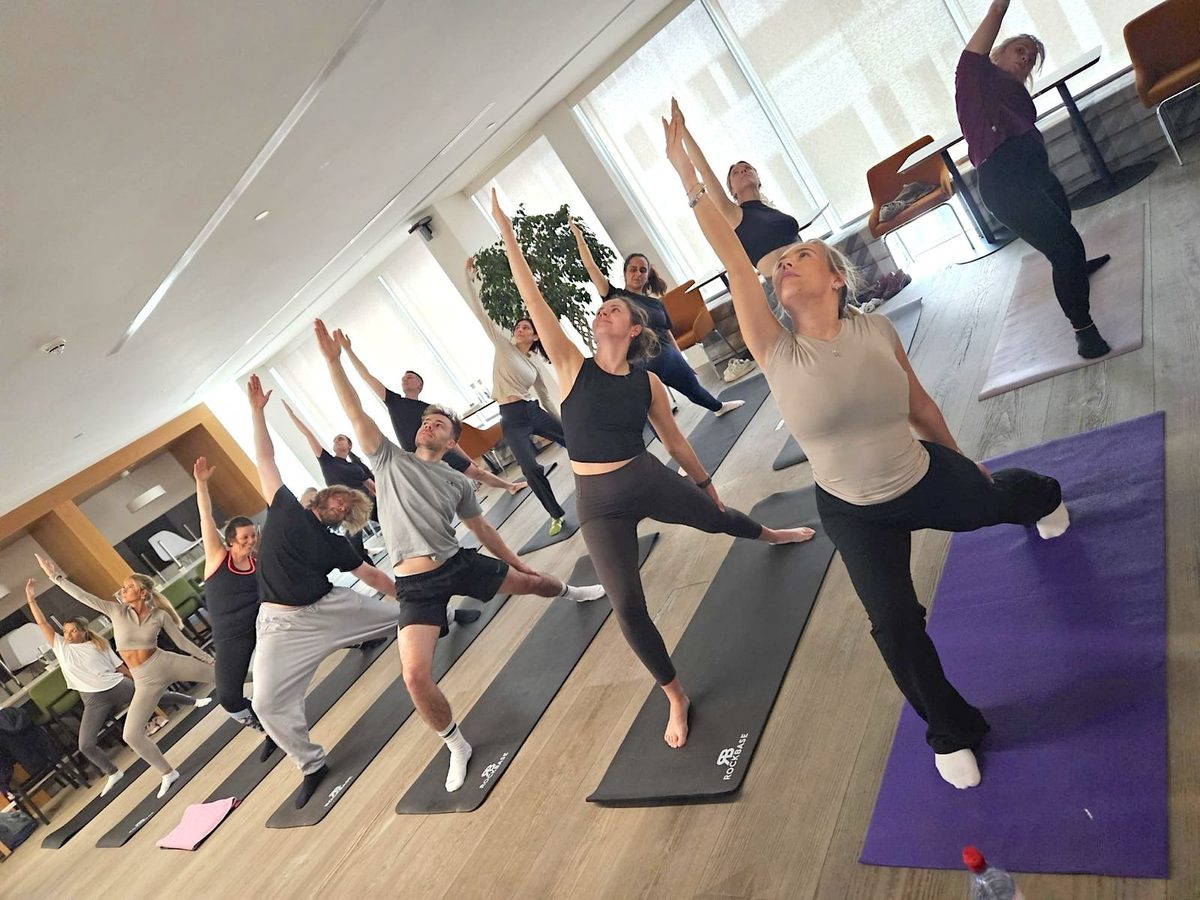
Mixed levels in the same class is the default, not an awkward exception to manage around. Some people will have done yoga for years, some will be doing their first ever session standing next to them, and the class is built to hold both without either one feeling out of place.
The first ten minutes
The first ten minutes of any beginner class are quieter than people expect. It's mostly settling: finding some space, a bit of breathing, some very gentle movement to get people out of 'meeting mode' and into the room. Nobody's doing anything that looks difficult in that opening stretch, and that's deliberate.
By the time anything more physical starts, the nervous energy in the room has usually already dropped, simply because it turned out to be less of a performance than anyone expected. People stop watching each other and start paying attention to how their own body feels, which is really the whole point.
What people worry about beforehand, and what actually happens
The worries are consistent across almost every team we work with: not being flexible enough, not knowing the poses, holding everyone else up. None of these turn out to matter. Flexibility isn't a requirement to start. It's often something that improves with a bit of regular practice, not a prerequisite for showing up. Nobody needs to know any poses in advance, because the whole session is instruction as you go.
As for holding people up, there's no pace to keep up with. It's not a race, and a good teacher is watching the room, not running a script regardless of who's following it.
What tends to happen after the first class
Reactions afterwards vary more than people expect, and there's no single right one. Some people want to book in every week from that point on. Others are glad they tried it once, enjoyed it, and are equally happy going back to a normal Tuesday without another session for a while. Both are a perfectly good outcome.
There's no pressure attached to becoming a regular, and nobody's kept a tally of who came back. A beginner class is exactly what it sounds like: a chance to find out what it's actually like, with no expectation attached to what happens afterwards either way.
Getting started
The easiest way to take the nervousness out of a first session is to be upfront with the team beforehand: no experience needed, wear whatever's comfortable, come along or don't, no pressure either way. That framing alone usually does more to get people through the door than anything about the class itself.
It also helps to say plainly that this is a beginner group, rather than letting people assume otherwise and quietly opt out. A short line in the invite, along the lines of 'no experience needed, mixed levels as standard,' tends to bring people who'd otherwise have sat this one out.
We've been running sessions like this in London offices since 2012, for teams who'd never tried it and teams who do it every week, often in the same room. Beginners are the normal starting point, not an edge case we occasionally accommodate.
Quick answers
Do I need to be flexible to join?
No. Flexibility tends to improve with practice. It isn't a requirement to start.
What should I wear?
Whatever's comfortable enough to move in. Plenty of people join in their normal work clothes.
What if I'm much less experienced than everyone else in the room?
That's the normal situation, not an unusual one. Classes are built around mixed ability as standard.