Three formats, one simple idea
Desk massage, chair massage and reflexology all work the same basic way: a qualified therapist comes to your office, brings their own equipment, and works through a set of short sessions with whoever wants one. All three are done fully clothed, with no oils, and nothing for your team to prepare beyond the room itself.
Where they differ is in the format, the space each one needs, and how many people you can realistically get through in a given block of time.
Desk massage
The therapist moves around the office, giving seated massages of around 10 to 15 minutes at each person's own desk. There's no appointment to book in advance; people opt in as the therapist circulates, and anyone who's mid-task simply gets caught on a later pass.
It works in open-plan offices of any size, needs only around a metre by a metre and a half of clear space near a workstation, and is the format that gets through the most people in a given hour, at roughly 4 to 6 per hour.
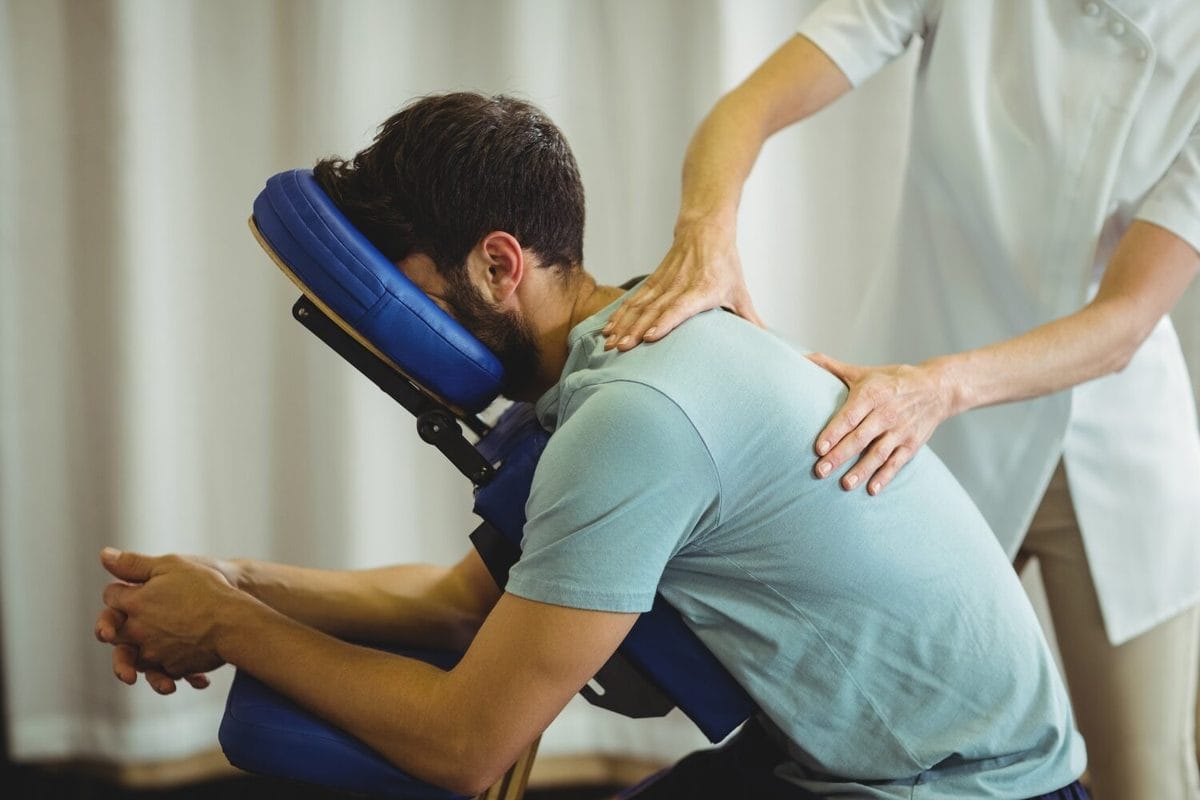
Chair massage
Chair massage uses a specially designed portable chair, set up in a private room or a quiet corner rather than out on the office floor. Sessions run to booked slots of around 15 to 20 minutes, so it suits a scheduled wellbeing day, or a regular slot as part of an ongoing programme, better than an ad hoc drop-in.
It needs a bit more space than desk massage, enough for the chair itself and for the therapist to move around it, and works for teams anywhere from 10 up to 100 or more, provided you bring in enough therapist time, or multiple therapists, at the bigger end of that range.
Reflexology
Reflexology applies pressure to specific points on the feet, and occasionally the hands, using thumb, finger and hand technique. It's done fully clothed with no oils at all, needing just a chair and a footstool rather than any specialist kit.
Sessions run to around 20 minutes per person, a touch longer than chair massage, and it tends to be booked for wellness days and events rather than as a rolling weekly fixture.
How many people fit into an hour, or half a day
The published rates run from £110 for a single hour up to £390 for a full eight-hour day, on the same ladder for desk and chair massage. Because desk massage sessions are shorter, a one-hour slot typically covers 4 to 6 people, while the same hour of chair massage or reflexology, at 15 to 20 minutes a person, covers closer to 3 to 4.
Scale that up and a half day, around four hours at £250, stretches to somewhere around 16 to 24 people for desk massage, or roughly 12 to 16 for chair massage or reflexology. For a specific headcount, it's worth getting in touch directly so we can work out the right mix of hours and therapists rather than guessing from an average.
Which suits which occasion
Desk massage is the natural choice when there's no private room going spare, or when you want the widest possible reach across a big, open-plan floor without asking anyone to sign up in advance.
Chair massage suits a proper scheduled wellbeing day or an ongoing programme where a private room is available and people are happy to book a slot. Reflexology tends to suit the same kind of scheduled event, but works well as something a bit different for a team that's already had chair or desk massage before.
Quick answers
Do any of these use oil, or ask us to remove clothing?
No. All three are done fully clothed, and reflexology specifically uses no oils at all. There's nothing to prepare or bring.
Which option needs the least space?
Desk massage, which needs only around a metre by a metre and a half near a workstation. Chair massage and reflexology both need a small private room or quiet corner instead.
Which format gets through the most people in an hour?
Desk massage, at roughly 4 to 6 people per hour, against 3 to 4 per hour for chair massage or reflexology.
Can we mix formats across a single event?
Yes, that's a common way to book a larger wellness day. Get in touch with your team size and we'll help work out the right combination and number of therapists.