Start with what you're actually trying to create
Wellbeing experiences like a sound bath, a dance and movement session, a class, or onsite massage are often described as light-touch and immersive, with the simple common aim of making people feel good for an hour or two. Several of them double up as decent team builders too, which is worth bearing in mind if that's part of why you're arranging the day in the first place.
Before picking a format, it helps to be honest about what you actually want out of the session. A restful reset for a team that's had a hard quarter is a different brief to an energising icebreaker for people who've never worked together properly, even though both might get filed under 'wellbeing day' internally.
Group size
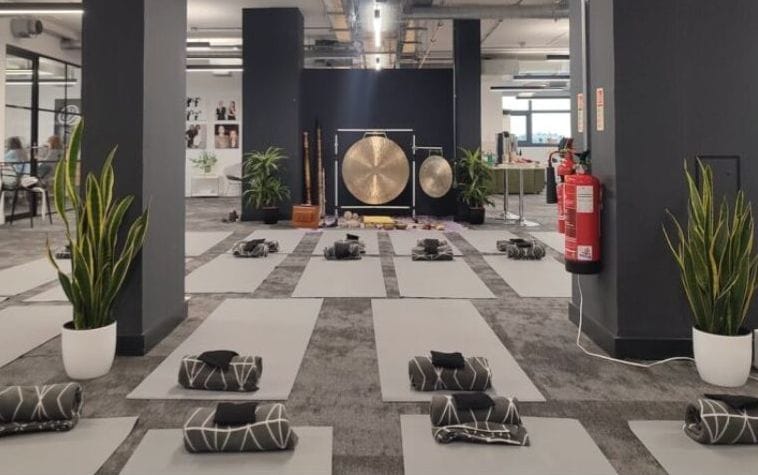
Some formats have a sweet spot. A sound bath is usually kept fairly boutique, with ten to twelve people the ideal number for one sitting, though a room can be adapted to take up to twenty-five if needed. Onsite massage scales differently again, with the number of people you can get through depending on how many hours you book and which style of massage you choose.
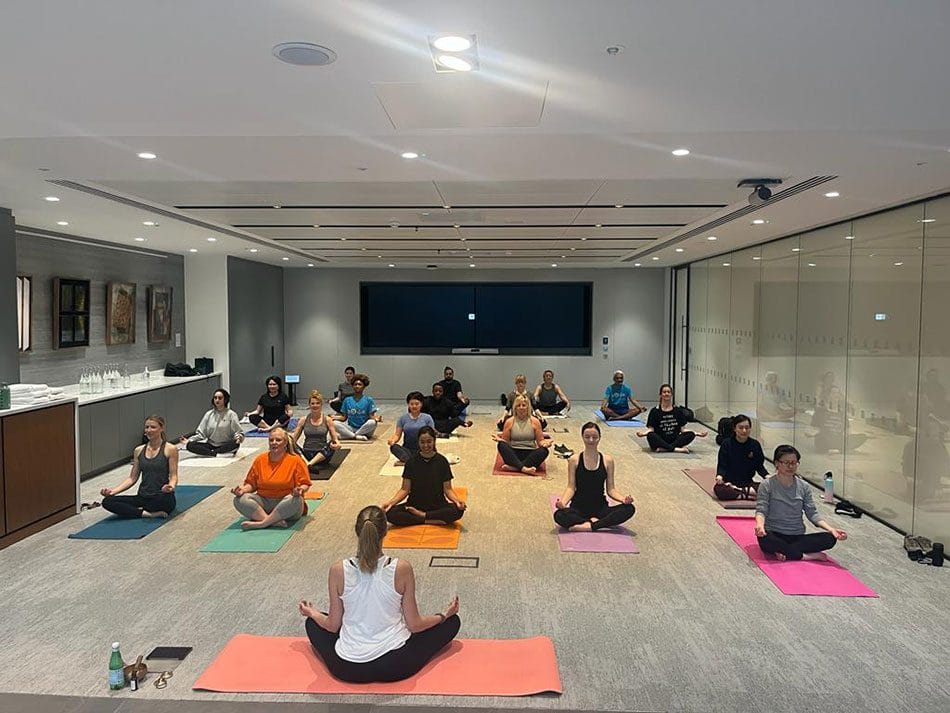
Classes such as yoga, Pilates or tai chi, and formats like dance and movement or laughter yoga, tend to flex more easily to whatever group you've got, provided the room has enough clear space for people to move safely. There's no fixed cap on any of these, unlike the more boutique sound bath format.
Energy level you're going for
If the aim is calm and restorative, a sound bath or onsite massage are the more passive options. Both ask very little of participants beyond sitting or lying comfortably, which suits a team that's tired, stressed, or simply wants an hour that doesn't feel like more effort.
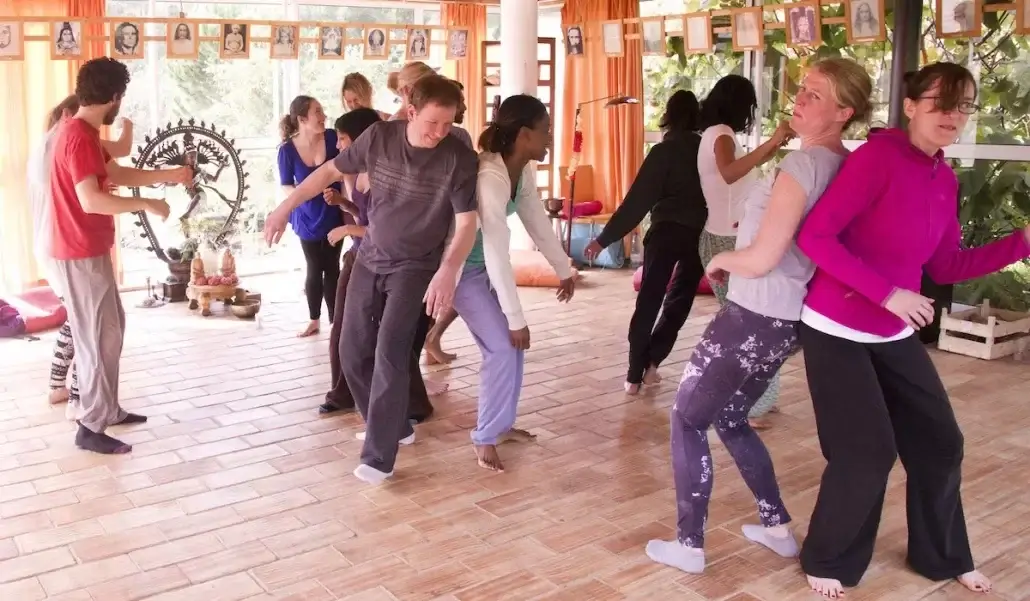
If you want to lift the room's energy instead, dance and movement is worth considering. Psychologist Dr Peter Lovatt of the University of Hertfordshire has linked dancing to bigger endorphin releases than most other exercise, and university studies at York and Sheffield found that a short bout of dancing left people in a better mood and thinking more creatively afterwards than sitting or cycling to the same music. Laughter yoga sits in a similarly energising bracket without any physical activity at all, built instead from breathing and laughter exercises.
Classes such as yoga, Pilates and tai chi land somewhere in the middle: more structured than a sound bath or massage, calmer than dance and movement or laughter yoga.
How well the team already knows each other
Dance and movement and laughter yoga both lean on interaction. Dr Lovatt has described the synchrony of moving to a beat with other people as a powerful way for humans to connect, and dance teacher Ginny Brown of the Imperial Society of Teachers of Dancing has made a similar point about dance breaking down inhibitions between people who've barely met. For a team still getting to know each other, that connecting element can do real work.
For a team that already knows itself well, or one that would rather not be put on the spot, a sound bath, a class, or onsite massage are gentler choices. None of them ask participants to perform in front of colleagues, which matters more than people admit for a self-conscious group.
A quick way to decide
As a rough guide: choose a sound bath or massage for calm and low interaction, dance and movement or laughter yoga for energy and connection, and a class like yoga, Pilates or tai chi for something in between that most teams already recognise.
Bespoke wellbeing days and one-off experiences are quoted individually rather than off a fixed rate card, since group size, format and length all affect the price. Get in touch and we'll talk through what would actually suit your team, rather than just booking whatever's trending.
Quick answers
Can we combine more than one experience in a single day?
Yes. Pairing a tea ceremony with a sound bath is a popular combination, for instance, and away-days often mix a calmer format with something more energising across the day.
Do these experiences need a special room or equipment?
Not usually. A facilitator can often work from the floor, a cushion, a mat or a desk, and participants sit however is comfortable. Most sessions fit into a meeting room or similar space a workplace already has.
What's the safest option if we're not sure how the team will respond?
A sound bath or onsite massage are the lower-risk choices, since neither asks anyone to interact or perform in front of colleagues. Both work well for a team that's easily self-conscious or simply wants to switch off.
How much does a one-off wellbeing experience cost?
It depends on the format, group size and length, so these are quoted individually rather than published as a flat rate. Get in touch with your team size and preferred format and we'll put a price together.